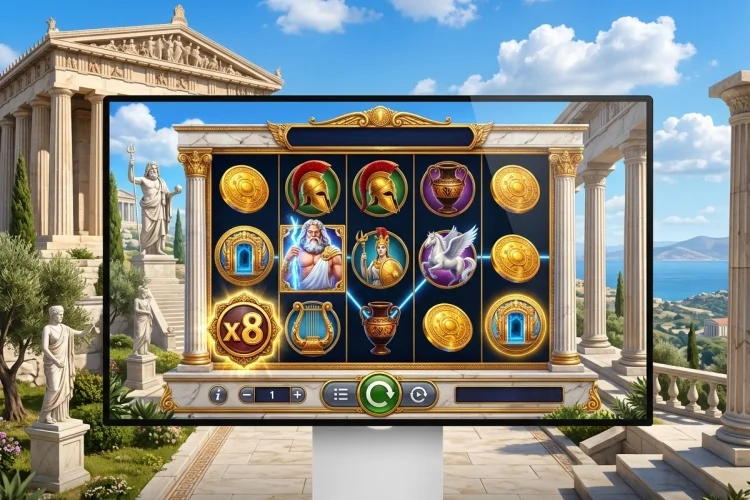
Casino Guides

Games With the Best Mathematical Conditions: A Practical Casino Guide

A casino game can look attractive because of its graphics, jackpot, or fast action, but none of those features tell you whether the underlying mathematics

Read More


Casino Games

How to Choose Casino Games Using House Edge and Volatility

Choosing a casino game based only on the biggest potential payout is a bit like choosing an investment based only on its best possible outcome.

Read More
Online Slots

How to Play High-Volatility Slots Without Draining Your Bankroll

High-volatility slots are built for players who can tolerate long quiet stretches in exchange for the possibility of much larger payouts. That sounds exciting, but

Read More
Responsible Gambling

How to Gamble Responsibly and Stay in Control

Gambling can be an enjoyable form of entertainment when it remains affordable, occasional, and easy to stop. Problems may begin when betting becomes a way to earn money, escape stress, recover previous losses, or change an uncomfortable mood.

Learning how to gamble responsibly and stay in control means deciding your boundaries before a game begins. Clear limits are usually more effective than relying on willpower after excitement, disappointment, or frustration has already influenced your judgment.

Responsible play does not make gambling risk-free. Casino games and betting products are designed around uncertain outcomes, and no strategy can guarantee a profit.

The World Health Organization notes that gambling-related harm can affect finances, relationships, health, employment, and family life.

The objective is therefore not to discover a perfect winning method. It is to protect your money, time, relationships, and well-being while recognizing when taking a longer break – or stopping completely – is the safer choice.

Treat Gambling as Entertainment, Not Income

A healthy starting point is to view gambling in the same way as paying for a film, meal, or sporting event. The money spent buys an experience and may not return.

Do not include potential winnings in your household budget or depend on gambling to cover bills. Even games involving skill contain uncertainty, while casino games normally have a built-in mathematical advantage.

When gambling begins to feel like a financial solution, the pressure to continue increases. That pressure can make it harder to accept losses and leave the game.

Set a Fixed Money Limit First

Choose an affordable amount before opening a gambling account or entering a venue. It should come only from disposable entertainment money left after housing, food, transport, savings, debt payments, and other essential commitments.

Think of this amount as the maximum cost of the session. Once it has been spent, stop instead of transferring additional money from another account.

Many platforms provide deposit, spending, or loss-control tools. The UK Gambling Commission identifies limit setting as one of several tools that can help customers manage gambling activity.

Create a Clear Time Boundary

Financial control is only one part of responsible gambling. Long sessions can interfere with sleep, work, relationships, exercise, and ordinary responsibilities even when the amount spent appears manageable.

Decide when the session will begin and end. A timer or calendar reminder can prevent a short activity from quietly becoming several hours.

Reality-check notifications show how long a gambling session has lasted and require the player to acknowledge the message. These alerts are designed to make elapsed time more visible during online play.

Never Chase Previous Losses

Chasing means continuing or increasing bets in an attempt to recover money already lost. It often turns a disappointing session into a much more expensive one.

A loss does not make the next wager more likely to win. Random games do not compensate players because they have experienced an unlucky sequence.

GambleAware advises stopping when the predetermined limit has been reached because attempts to win back losses can produce even larger losses and wider personal harm. Treat every completed wager as final rather than as a debt the next game must repay.

Avoid Gambling When Judgment Is Weakened

Strong emotions can reduce the quality of financial decisions. Avoid gambling while angry, lonely, stressed, depressed, exhausted, or desperate for a distraction.

Alcohol and other substances may also weaken self-control. When your judgment is impaired, it becomes easier to increase stakes, ignore limits, or misunderstand the amount already spent.

GamCare advises setting money and time boundaries and warns against gambling when angry or upset. A useful personal rule is to gamble only when calm, rested, and able to stop without resistance.

Use Safer Gambling Tools Early

Protective tools are most useful before serious difficulties develop. Depending on the operator and jurisdiction, these may include deposit limits, activity statements, reality checks, cooling-off periods, bank transaction blocks, and blocking software.

A time-out temporarily prevents access and creates distance from impulsive decisions. The UK Gambling Commission explains that time-outs can provide a break, help users monitor spending, and support clearer thinking.

Some banks also allow customers to block gambling payments. Device-level software can restrict access to gambling websites and applications, adding another barrier between an urge and a transaction.

Recognize Signs That Control Is Slipping

Warning signs may include spending more than intended, hiding activity, borrowing money, repeatedly chasing losses, neglecting responsibilities, or feeling restless when trying to stop.

The National Council on Problem Gambling defines problem gambling as behavior that harms the individual or family and disrupts daily life or employment. It also recognizes gambling disorder as a mental health diagnosis.

The NHS notes that gambling can damage finances, physical and mental health, and relationships. If these effects are appearing, seeking support early is more important than trying to prove you can regain control alone.

Knowing how to gamble responsibly and stay in control begins with accepting that gambling is paid entertainment, not a reliable income source.

Set firm money and time limits, avoid chasing losses, keep essential funds separate, and never gamble when emotions or substances are affecting your judgment.

Use account limits and reality checks before they feel necessary, not only after a problem develops. Review your activity honestly and pay attention to concerns raised by people you trust.

When stopping becomes difficult or gambling starts affecting your finances, health, or relationships, take a break and contact a qualified support service. Protecting your well-being is always more valuable than continuing another game.


Casino Strategy

How Blackjack Basic Strategy Works: A Beginner’s Guide

Blackjack is unusual among casino games because players make decisions that directly affect the outcome of each hand. You cannot control which card appears next, but you can choose whether to hit, stand, double down, split, or surrender.

Making these choices randomly gives the casino a larger advantage than necessary. This is where blackjack basic strategy becomes useful.

It is a mathematically developed set of instructions that identifies the best available action for every combination of a player’s hand and the dealer’s visible card.

Researchers calculate these decisions by comparing the expected value of each possible move across all relevant card outcomes.

Basic strategy does not predict cards, guarantee wins, or eliminate the house advantage. Instead, it reduces avoidable errors and helps players make consistent decisions.

The correct chart also depends on the table rules, including the number of decks, blackjack payout, dealer treatment of soft 17, and whether doubling after splitting is permitted.

What Is Blackjack Basic Strategy?

Basic strategy is a decision system designed to maximize the expected value of each hand. It evaluates the player’s current cards, the dealer’s upcard, and the rules of the game before recommending an action.

A mathematical model calculates what may happen after hitting, standing, doubling, splitting, or surrendering. It then selects the option with the highest expected return—or the smallest expected loss when every choice is unfavorable.

The system is called “basic” because it does not require tracking previously dealt cards. It provides a fixed response to the information visible at the table.

Why the Dealer’s Upcard Matters

The dealer follows predetermined rules instead of making personal choices. Depending on the table, the dealer must normally draw below 17 and either hit or stand on soft 17. Official blackjack rules can permit both variations.

A dealer showing 4, 5, or 6 is in a relatively vulnerable position because additional cards may cause the hand to exceed 21. When the dealer displays a 9, 10, or ace, the player usually faces greater pressure to improve a weak total.

That is why the same player hand may require different actions. A hard 16 might stand against a dealer 6 but hit against a dealer 9 under a standard multi-deck strategy chart.

Hard Hands, Soft Hands, and Pairs

Hard hands

A hard hand has no ace counted as 11. For example, 10-6 is a hard 16. Drawing another card creates a significant bust risk, so the dealer’s upcard becomes especially important.

In a common four- or eight-deck strategy, totals of 13 through 16 stand against dealer cards 2 through 6 and hit against 7 through ace. Hard totals of 17 or more stand.

Soft hands

A soft hand contains an ace that can still count as either 1 or 11. Ace-6 is soft 17 because it can be valued as 7 without busting after a high card.

This flexibility makes hitting or doubling less dangerous. For example, a standard strategy may double ace-6 against a dealer 3 through 6 and hit against most other upcards.

Pairs

When the first two cards have the same value, splitting may create two separate hands. A new wager equal to the original stake is normally required, and house rules determine whether resplitting or doubling afterward is allowed.

Aces and eights are commonly split, while tens are normally kept as a strong total of 20. Two fives are generally treated as a hard 10 and doubled against suitable dealer cards rather than split.

How Hit, Stand, and Double Decisions Work

Hitting adds another card, while standing ends the player’s action. Doubling increases the wager and usually provides exactly one additional card. Official BCLC rules, for example, allow a player to double on an original two-card hand and receive one final card.

Basic strategy recommends doubling when the probability of finishing with a strong total justifies placing more money at risk. A hard 10 commonly doubles against dealer cards 2 through 9, while a hard 9 usually doubles against 3 through 6.

The recommendation is based on expected return, not confidence, intuition, or a belief that a particular card is “due.”

Why Insurance Is Usually Avoided

Insurance is offered when the dealer shows an ace. The player may place an additional wager of up to half the original bet, and the insurance bet generally pays 2 to 1 when the dealer has blackjack.

Despite its name, insurance is a separate wager on whether the hidden card has a value of 10. A non-counting player does not normally have enough information to make this side bet favorable.

Basic strategy therefore generally rejects insurance and even money. Avoiding it keeps the player focused on the main hand rather than adding another house-advantaged wager.

How Much Can Basic Strategy Help?

Basic strategy cannot create certainty, but it can substantially reduce the cost of poor decisions. OLG PlaySmart reports that correct decisions on hitting, standing, doubling, and splitting can reduce the blackjack house edge to around 0.5% under favorable rules.

The exact percentage varies. One casino’s published figures list a 0.51% edge for a four-deck game using its best technique, compared with 0.85% when the dealer draws on soft 17.

These percentages are long-term mathematical averages. A player can still win or lose significantly during a short session.

How to Learn the Strategy

Begin with a chart designed for the exact game you intend to play. Confirm the number of decks, whether the dealer hits soft 17, and whether doubling after splitting is available.

Study hard totals first because they occur frequently. Move next to soft hands and finish with pair-splitting decisions. Practicing with free games or flashcards can help make the correct response automatic.

Strategy cards may also be permitted at some tables, but players should check the casino’s policy before using one.

Blackjack basic strategy works by comparing the mathematical value of every legal action using the player’s hand, dealer’s upcard, and table rules.

It provides consistent guidance for hard totals, soft totals, pairs, doubling opportunities, and other decisions.

The system cannot predict the next card or guarantee a profitable session. Its purpose is to reduce avoidable mistakes and keep the house advantage as low as the rules allow.

Before playing, identify the exact game conditions, select the matching strategy chart, and practice the decisions without risking money. Set a strict entertainment budget, avoid chasing losses, and treat blackjack as a paid leisure activity rather than a source of income.

Casino Strategy

The Mathematics Behind Roulette Bets: Odds and House Edge

Roulette looks simple because every round ends with one ball landing in one numbered pocket. Behind that simple result, however, is a carefully designed probability model.

Every wager has a measurable chance of winning, a fixed payout, and a long-term expected return. Understanding the mathematics behind roulette bets helps explain why a straight-up number pays more than a red-or-black wager.

It also reveals why European roulette generally provides better odds than American roulette, despite using nearly identical betting layouts and payouts. The central idea is that casino payouts are slightly lower than the true mathematical odds.

That difference creates the house edge. Players can change how frequently they win by selecting different bets, but they cannot remove the casino’s long-term advantage through ordinary bet selection.

Roulette should therefore be treated as a game of chance and entertainment. Mathematics cannot predict the next winning number, but it can help players understand risk, compare table variants, and avoid misleading claims about guaranteed systems.

How Roulette Probability Is Calculated

A European roulette wheel contains 37 pockets: numbers 1 through 36 and a single zero. If the wheel is fair, every pocket has a probability of 1/37, or approximately 2.70%, on each spin.

American roulette contains 38 pockets because it adds double zero. The probability of any specific number is therefore 1/38, or approximately 2.63%. Official American roulette rules confirm that the wheel contains 1–36, 0, and 00.

The basic probability formula is:

Probability of winning = Winning pockets ÷ Total pockets

A six-number line bet on a European wheel, for example, wins on 6 of 37 possible outcomes. Its probability is 6/37, or about 16.22%.

Why Payouts Are Lower Than True Odds

True odds describe the fair payout required for neither side to have a mathematical advantage. A single number on a European wheel loses on 36 pockets and wins on one, so its true odds are 36 to 1.

Roulette does not pay 36 to 1. A straight-up wager normally pays 35 to 1. Other standard payouts include 17 to 1 for a split, 11 to 1 for a street, 8 to 1 for a corner, and 5 to 1 for a six-number line.

The missing unit in the straight-up payout is not an error. It is part of the mathematical structure that gives the casino an advantage.

Calculating Expected Value

Expected value, commonly shortened to EV, estimates the average profit or loss produced by a wager over a very large number of trials.

For a $1 straight-up bet on European roulette:

  • The chance of winning $35 is 1/37.
  • The chance of losing $1 is 36/37.

The calculation is:

EV = (1/37 × $35) + (36/37 × −$1)

The result is approximately −$0.027, meaning an expected loss of 2.7 cents per dollar wagered. This does not mean every $1 bet loses exactly 2.7 cents. A single spin either wins or loses, but the average approaches that figure over many rounds.

Understanding the Roulette House Edge

The house edge is the expected casino advantage expressed as a percentage of the amount wagered. Standard European roulette has a house edge of approximately 2.70%.

American roulette has a higher edge because the additional 00 pocket increases the number of losing outcomes without improving most payouts. Its standard house edge is approximately 5.26%.

Suppose a player makes 1,000 separate $10 wagers, creating $10,000 in total betting turnover. The theoretical expected loss is about $270 on a European wheel and approximately $526 on a standard American wheel. Actual short-term results may be much higher or lower.

Inside Bets and Outside Bets

Inside bets cover individual numbers or small groups. Straight-up, split, street, corner, and line wagers belong to this category. They win less frequently but produce larger payouts.

Outside bets include red or black, odd or even, high or low, columns, and dozens. A red wager covers 18 numbers and pays 1 to 1, while a dozen covers 12 numbers and pays 2 to 1.

Outside wagers provide more frequent wins, but they do not normally improve the expected return. On a standard single-zero wheel, most conventional bets carry the same 2.70% house edge.

The Special American Five-Number Bet

American roulette includes a five-number wager covering 0, 00, 1, 2, and 3. It pays 6 to 1 under standard rules.

Its expected value is:

EV = (5/38 × 6) − (33/38 × 1)

This produces a house edge of approximately 7.89%, making it less favorable than most other standard American roulette bets. It shows why players should examine individual wagers instead of assuming every option has identical mathematics.

Do Previous Results Affect the Next Spin?

In a fair game, every spin is independent. If red appears six times consecutively, the probability of red on the next European spin remains 18/37. The wheel does not remember previous outcomes.

Licensed virtual roulette products may use random number generators, while live games use physical equipment. Regulatory testing examines whether digital outcomes follow the expected random distribution and whether the game’s actual return matches its mathematical design.

Believing that black is “due” after a sequence of red results is known as the gambler’s fallacy.

The mathematics behind roulette bets is based on probability, fixed payouts, expected value, and variance.

European roulette has 37 pockets and a standard house edge of approximately 2.70%, while American roulette uses 38 pockets and generally carries a 5.26% edge. Larger-coverage bets win more often, but their smaller payouts preserve the casino’s advantage.

Mathematical knowledge cannot guarantee a winning session or predict the next pocket. It can, however, help players choose lower-edge variants, understand the cost of repeated wagering, and reject systems based on false patterns.

Before playing, review the wheel format and paytable, set a strict entertainment budget, and never risk money needed for essential expenses.

Payment Methods

How Long Do Casino Withdrawals Usually Take? A Complete Guide

Winning at an online casino can be exciting, but the experience is not complete until the money reaches your payment account. This is where many players ask an important question: How long do casino withdrawals usually take?

The answer can range from several minutes to five business days or longer, depending on the casino, payment provider, verification status, and banking network.

A withdrawal normally passes through two separate stages. First, the casino reviews and approves the request. Second, the selected payment provider delivers the funds.

Even when an e-wallet or instant banking service supports rapid transfers, it cannot process the payout until the operator releases it.

Understanding this process helps players set realistic expectations and recognize unusual delays. It also makes it easier to choose an appropriate withdrawal method before depositing.

Players should always use licensed operators, provide accurate payment details, and complete identity verification as early as possible.

What Is the Average Casino Withdrawal Time?

Most online casino withdrawals take anywhere from a few minutes to five business days after approval. Instant banking services and selected e-wallet transactions are often among the fastest, while conventional bank transfers usually take longer.

Trustly states that bank payouts generally take no more than one business day but may require up to three days. Skrill and Neteller explain that bank withdrawals may take between one and five business days.

These estimates do not necessarily include the casino’s internal review period. Players should therefore check both the operator’s processing time and the provider’s delivery time.

The Casino Approval Stage

Before sending money, an operator may review account ownership, wagering activity, bonus conditions, payment details, and security information. This review is designed to prevent fraud, underage gambling, money laundering, and unauthorized transactions.

Licensed operators may request identity documents, but necessary checks should be completed promptly. The UK Gambling Commission states that businesses should not wait until a withdrawal is requested before asking for information they could reasonably have requested earlier.

A first withdrawal may take longer because the account has not previously passed a complete payment review.

E-Wallet Withdrawal Times

E-wallets are often considered fast casino withdrawal methods because funds can sometimes reach the wallet shortly after the operator approves the transaction. However, moving the money from the wallet to a bank account creates an additional processing stage.

PayPal says an instant transfer to an eligible bank or card typically takes a few minutes, although it may take up to 30 minutes. Standard transfers can take between one and five business days, depending on the country and bank-clearing system.

Skrill and Neteller bank withdrawals generally require one to five business days. The exact estimate is normally displayed before the transfer is confirmed.

Debit and Credit Card Withdrawals

Card withdrawals commonly take between one and three business days after casino approval. Availability depends on whether the card issuer supports incoming payouts and whether the operator can return funds through the original transaction channel.

Skrill and Neteller estimate that eligible Visa card withdrawals can take up to three business days. Visa Direct may deliver some transfers in real time, but actual availability depends on the receiving institution, region, account type, and compliance process.

A card deposit does not automatically guarantee that the same card can receive winnings.

Bank Transfer Withdrawal Times

Bank transfers are widely available but are usually slower than e-wallets or real-time payment systems. Domestic transfers may arrive within one to three business days, while international or correspondent-bank payments can take longer.

Trustly lists a timeframe of one to three business days for US ACH withdrawals and one to four business days for Canadian EFT transactions. Weekends and public holidays are not counted as processing days.

Incorrect account numbers, unsupported banks, and differences between the casino account name and bank account name can delay or reject a transfer.

Cryptocurrency and Instant Banking

Cryptocurrency withdrawals may arrive within minutes or hours after approval, but the result depends on network congestion and the number of confirmations required.

Bitcoin creates a new block approximately every ten minutes, although platforms may wait for multiple confirmations before crediting a transaction.

Regional systems can be even faster. Interac e-Transfers in Canada are usually almost instant but may take up to 30 minutes. Neteller states that its supported Interac withdrawals are processed instantly and should arrive within a few minutes.

Why Casino Withdrawals Get Delayed

Common causes include incomplete verification, expired documents, incorrect banking information, bonus conditions, unusually large transactions, weekends, public holidays, and security reviews.

Using a third party’s bank account or e-wallet can also cause rejection. Skrill requires bank withdrawals to be sent to a personal account held in the same user’s name.

Players should contact support when the published timeframe has passed, rather than submitting multiple withdrawal requests that may complicate the review.

So, how long do casino withdrawals usually take? Fast methods may deliver funds within minutes after approval, while cards commonly require up to three business days and bank transfers may take one to five business days.

The total timeline also depends on the casino’s internal checks, account verification, banking hours, and the accuracy of the payment information.

Before depositing, review the operator’s withdrawal policy and confirm that your preferred method supports payouts. Complete verification early, use an account in your own name, and retain the transaction reference.

Choose a licensed casino, set a clear entertainment budget, and contact customer support when a payment exceeds the stated processing period.

Payment Methods

The Most Common Online Casino Payment Methods Explained

Choosing a game may seem like the biggest decision at an online casino, yet the payment method can shape the experience just as strongly. Deposit speed, withdrawal access, fees, currency conversion, verification requirements, and regional restrictions differ widely.

A method that funds an account instantly may still produce a slower payout, while a privacy-focused option may charge extra for transfers or exchange rates.

Understanding the most common online casino payment methods makes it easier to compare convenience without ignoring security and financial control.

Debit cards are familiar, e-wallets separate casino activity from everyday banking, bank transfers move funds directly, and prepaid vouchers create a natural spending ceiling.

Some platforms also accept cryptocurrency, although volatility and limited consumer protection add risk.

Availability is never universal, and banking rules can change by market. Before paying, confirm that gambling is legal in your location, that you meet the required age, and that the operator holds a valid licence.

Debit and Credit Cards

Visa and Mastercard cards remain widely recognized deposit options. Players normally enter the card number, expiry date, security code, and amount, with approval often completed quickly.

Withdrawals may be less straightforward because some casinos cannot return funds to every card type. Banks may also block gambling transactions. In Great Britain, licensed operators cannot accept credit cards for gambling, demonstrating why regional rules must always be checked.

E-Wallets

Skrill, Neteller, and approved PayPal services act as intermediaries between the casino and a bank account or card. They can reduce the amount of financial information shared directly with the gambling website and may support fast deposits and withdrawals.

Convenience does not guarantee zero cost. Funding charges, withdrawal fees, inactivity fees, and currency conversion may apply. PayPal also limits gambling use to approved merchants and permitted jurisdictions.

Bank Transfers and Pay-by-Bank

Traditional bank transfers are useful for players who prefer direct account-to-account payments or need higher transaction limits. Their main disadvantage is processing time, particularly across different banks, currencies, weekends, or public holidays.

Open-banking services such as Trustly offer a faster pay-by-bank experience in supported markets. However, a casino may still need to approve a withdrawal before the provider begins processing it.

Prepaid Vouchers

Prepaid products let users spend only the balance loaded onto a code or card. PaysafeCard, for example, allows online payments through a prepaid code without requiring a conventional credit card. This can create a clear deposit limit and reduce exposure of banking information.

The drawback is that prepaid options are often better for deposits than withdrawals. Winnings may need to be sent to a verified bank account or e-wallet instead.

Cryptocurrency

Some casinos accept Bitcoin, Ethereum, stablecoins, or other digital assets. Crypto transfers can operate around the clock, but transactions are generally irreversible and an incorrect wallet address may result in permanent loss.

Network fees can vary, and the local-currency value of a payment may change before conversion. Regulators warn that cryptoassets can be highly volatile and may provide weaker protection than conventional payment services.

Mobile and Local Payment Systems

Regional services may be more practical than international brands. Examples include Interac e-Transfer in Canada, instant-banking systems in Europe, mobile wallets, and local QR payments.

Interac states that e-Transfers are usually almost instant but can take up to 30 minutes depending on the financial institution. Local methods may also offer familiar authentication and domestic-currency support.

Security and Verification

A secure payment brand cannot make an unlicensed casino trustworthy. Review the operator’s licence, encryption, fee table, withdrawal conditions, and support options before transferring funds.

Card-handling systems should follow PCI DSS, which establishes requirements for protecting payment account data.

Licensed operators may request identity documents for age checks, anti-fraud controls, and legal compliance. Complete verification early and use payment accounts registered in your own name.

The most common online casino payment methods include cards, e-wallets, bank transfers, prepaid vouchers, cryptocurrency, and regional payment networks. Each creates a different balance of speed, privacy, cost, availability, and withdrawal convenience.

The most suitable option is not automatically the fastest deposit method; it should also be legal, transparent about fees, and accepted for payouts.

Before depositing, compare the casino cashier page with the payment provider’s official terms. Verify your account, set a fixed entertainment budget, and avoid borrowed money.

Choose a licensed operator and use a method that supports secure transactions, clear records, firm limits, and responsible spending habits.

Live Casino

Live Casino Etiquette Every Player Should Know Before Joining

A live casino table may look similar to a traditional casino floor, but players participate through a digital interface. A real dealer handles physical cards, wheels, or other equipment while participants place bets using buttons and virtual chips on their screens.

This combination creates a unique set of expectations. Players must follow the game’s betting timer, communicate appropriately through chat, understand the dealer’s role, and avoid disrupting other participants.

Good behavior cannot improve the odds, but it can make the experience smoother and reduce mistakes.

Learning live casino etiquette every player should know is especially useful for beginners who may feel pressured by countdowns, unfamiliar side bets, or a fast-moving table.

Etiquette is not only about politeness. It also includes checking wagers carefully, respecting the published rules, protecting personal information, and knowing when to leave.

Before joining, verify that the operator is licensed in the relevant jurisdiction and set an affordable spending limit. Local laws and platform rules can differ, so always review the casino’s terms before playing.

Observe the Table Before Placing a Bet

There is no need to start wagering immediately after entering a live room. Watch one or two complete rounds to understand the betting window, dealer announcements, settlement process, and location of important controls.

Confirm the minimum and maximum stakes before participating. A table that looks affordable may contain optional side bets that substantially increase the total amount placed during each round.

Live casino versions can also use different rules despite sharing the same game name. Regulatory standards in Great Britain require operators to make game rules, payouts, and information about the likelihood of winning available to customers.

Place Your Bet Before the Countdown Ends

Live tables use a limited betting window so all wagers are recorded before cards are revealed or a wheel result becomes known. Select the chip value, place it on the correct position, and verify the total while time remains.

Avoid tapping repeatedly during the final second. Internet latency may cause a bet to arrive after the server has closed the round, even when the countdown still appears active on your screen.

A regulated remote platform should clearly display how much money is being wagered, including any conversion into chips or credits. Checking that figure before confirmation is both good etiquette and sensible financial control.

Respect the Dealer’s Role

The dealer is responsible for conducting the game according to documented procedures. Depending on the table, this may include dealing cards, spinning a wheel, announcing results, and preparing the next round.

The dealer does not personally choose who wins. British live dealer standards require trained croupiers, supervised operations, secure equipment, and video surveillance sufficient to confirm whether procedures were followed.

Do not blame or insult the dealer after an unfavorable result. Losing is part of the mathematical uncertainty of casino games, not evidence that the dealer has targeted an individual participant.

Use the Chat Feature Politely

Live chat allows players to greet the dealer, ask a brief game-related question, or interact with other participants. Keep messages respectful, concise, and relevant to the table.

Avoid offensive language, repeated complaints, promotional messages, or requests for personal information. Never share your full name, address, phone number, password, payment details, or verification code in a public chat.

The dealer may not answer every message, especially at a busy table. Managing cards, chips, announcements, and game procedures takes priority over conversation.

Do Not Pressure Other Players

At some live blackjack tables, several participants may make their own decisions during the same round. Another player might hit, stand, split, or double in a way you would not choose.

Do not criticize that person or claim that their decision caused your loss. Cards are dealt according to the table procedure, and each participant is entitled to make the permitted choices for their own hand.

The same principle applies to shared betting and bet-behind formats. Understand whether you control the decision or are following another seat before committing money.

Handle Technical Problems Calmly

A frozen video stream does not necessarily mean the round has stopped. The studio and casino server may continue recording accepted wagers even when your device temporarily loses the feed.

Do not immediately repeat the bet. Reconnect, review your balance, and check the game-history page to determine whether the original wager was accepted and settled.

Technical standards for interrupted remote gambling require systems to retain enough information to complete, restore, or appropriately void affected games. If the result remains unclear, contact official support with the table name, time, wager amount, and round reference.

Leave the Table Without Chasing Losses

You may leave after any completed round. There is no requirement to stay until the dealer changes, a card shoe ends, or a losing streak reverses.

Do not increase the stake because a result appears overdue. Previous Banker hands, red roulette numbers, or dealer wins do not force the next round to produce the opposite outcome.

Set a spending limit before starting rather than negotiating with yourself during play. GambleAware recommends choosing a limit in advance and using account tools, separate funds, written reminders, or support from someone trusted to help maintain it.

Live casino etiquette combines courtesy, attention, and financial discipline. Observe the table before betting, respect the countdown, verify every stake, and communicate politely with the dealer and other participants.

Technical issues should be handled through game history and official support rather than repeated bets or angry chat messages. Other players are entitled to make their own permitted decisions, and no one is obligated to remain at a table after a round ends.

Before your next session, verify the operator through an official licensing register, read the table rules, and write down your money and time limits.

Leave as soon as either limit is reached. A respectful, controlled approach makes live casino play easier to understand, even though it cannot remove the risk of losing.

Live Casino

What to Expect During Your First Live Casino Session

Entering a live casino room for the first time can feel more intimidating than opening a regular online game.

A real dealer appears on the screen, other players may be placing bets, a countdown is running, and several buttons or betting areas compete for your attention. Fortunately, the basic experience is easier to understand once you know how a round is organized.

Live casino games combine real-time video streaming with an online betting interface. The dealer handles physical cards, a roulette wheel, dice, or other equipment, while players submit wagers through a computer or mobile device.

Unlike virtual casino games, the outcome is normally produced by equipment inside a studio rather than an animated random number generator.

Knowing what to expect during your first live casino session can help you avoid rushed bets and interface mistakes. It cannot guarantee a winning result, but it can make the experience more controlled.

Before participating, confirm that gambling is legal in your location, verify the operator’s licence, and set a spending limit using only money you can afford to lose.

Choosing Your First Live Casino Table

The live lobby will usually display multiple blackjack, roulette, baccarat, poker-style, and game-show tables. Each table may have different minimum bets, languages, rules, dealers, and round speeds.

Start with a familiar game and a low minimum stake. Standard blackjack, European roulette, or traditional baccarat is normally easier to follow than a version containing multipliers, jackpots, or numerous side bets.

Live casino providers now offer both traditional table games and modified variations. The existence of many formats makes checking the individual rules essential, even when you already recognize the game’s name.

Understanding the Live Game Screen

The screen is generally divided into two areas. One section shows the dealer and physical table, while the other contains betting controls, your balance, available chips, game rules, and previous results.

Regulated remote systems should clearly show the amount being wagered before the player confirms a bet. This includes the unit stake, total stake, and any conversion between money and digital chips or credits.

Spend a few rounds watching before betting. Identify the countdown timer, minimum and maximum limits, confirmation indicator, and button used to repeat or clear wagers.

Placing a Bet Before the Timer Ends

Every live round includes a limited betting window. You select a chip value and place it on the appropriate position before the countdown reaches zero.

In roulette, you may place chips on numbers, colors, columns, or other sections of the layout. Baccarat normally offers Player, Banker, Tie, and optional side bets. Blackjack requires an initial wager before cards are dealt, followed by possible decisions such as hit, stand, double, or split.

Once the dealer announces that betting is closed, new wagers are rejected. Avoid placing chips during the final second because a slow connection or delayed tap may prevent the bet from registering.

What the Dealer Does During a Round

The dealer manages the physical part of the game. Depending on the title, this can involve dealing cards, spinning a roulette wheel, announcing results, collecting losing wagers, and starting the next betting period.

Live dealer outcomes use physical equipment rather than the same process applied to RNG-driven virtual tables. Regulators may require controls covering the supply, installation, maintenance, and continued operation of cards, roulette wheels, and other devices.

The dealer does not usually control your account balance or decide whether an individual player wins. The digital system records accepted wagers and settles them according to the recognized result.

Interacting Through Live Chat

Many live games include a chat window. Players may greet the dealer, ask a simple question, or comment on the game as long as the platform permits it.

The dealer may respond verbally, but cannot provide personalized betting advice or alter the rules. Large tables can contain many participants, so not every message will receive a response.

Keep messages polite and relevant. Avoid abusive language, requests for personal information, or accusations based only on losing results. Licensed live dealer operations are expected to be fair and independently auditable rather than dependent on the dealer’s personal preference.

Expect a Different Pace From Virtual Games

Live games normally move at the speed of the dealer and physical equipment. This creates natural pauses for betting, dealing, spinning, and payout settlement.

Some tables are specifically designed for faster play. For example, one provider describes its Speed Baccarat rounds as approximately 27 seconds compared with around 48 seconds for its standard version.

Faster tables allow more wagers within the same period, potentially increasing total spending. Beginners may find standard-speed games easier because they provide more time to check the stake and understand each result.

Handling Disconnections and Interrupted Rounds

A slow internet connection may cause frozen video, delayed audio, or a temporary disconnection. The video stream and betting interface may not always fail at exactly the same time.

If your wager was accepted before the connection dropped, the round may continue and be settled normally. Check the game history or account transaction page after reconnecting rather than immediately placing the wager again.

Regulatory standards for interrupted gambling require systems to retain enough information to restore or settle eligible games appropriately. Depending on the situation, the wager may be completed or voided and returned.

Setting Limits Before the Session

Live dealers and social interaction can make time pass quickly. Decide on both a financial limit and session duration before opening the table.

GambleAware advises setting a spending limit in advance because making that decision during play can be more difficult. Online account tools, separate entertainment funds, and written limits can provide additional control.

Do not increase your budget after losing or continue because the dealer is about to change. A new shoe, dealer, or roulette spin does not guarantee better results.

Your first live casino session will normally involve choosing a table, reviewing its limits, watching a timed betting phase, and observing a dealer operate real gaming equipment.

The interface records your wagers and balance, while the live stream presents each result in real time.

Begin by watching several rounds without betting. Read the rules, identify the total stake, and choose a standard-speed table with affordable limits. Prepare for occasional streaming delays and check transaction history whenever a round appears interrupted.

Most importantly, decide how much money and time you will spend before starting. Leave when either limit is reached, regardless of the result.

Live casino gambling should remain optional entertainment, never a strategy for recovering losses or producing regular income.

Table Games

The Most Popular Table Games in Online Casinos Explained

Online casino lobbies contain many table games, but a small group of classics appears on most platforms.

Blackjack, roulette, baccarat, poker-based games, and craps have moved from physical casino floors to digital screens, making them accessible through computers, tablets, and mobile devices. The popularity of each game varies by market, platform, and player group.

In research published by the UK Gambling Commission, virtual roulette was the most frequently played non-slot online casino game among respondents, while poker, live roulette, and blackjack also attracted substantial participation.

Understanding the most popular table games in online casinos helps players distinguish between card games, wheel games, dice games, and peer-to-peer formats. Some titles involve repeated player decisions, while others follow fixed drawing procedures.

Some use random number generator software, whereas live dealer versions rely on physical cards, wheels, or dice. None offers guaranteed profit, so players should always read the rules and use only affordable entertainment funds.

Blackjack: The Classic Decision-Based Card Game

Blackjack is played against the dealer. The objective is to finish with a card total closer to 21 than the dealer without exceeding 21.

Number cards retain their face value, picture cards count as ten, and an ace can usually count as one or eleven. Players may be able to hit, stand, double down, split matching cards, or surrender, depending on the table rules.

Blackjack remains attractive because player decisions influence how each hand develops. However, rules differ between tables. The number of decks, dealer behavior, splitting conditions, and payout for a natural blackjack can all affect the mathematical return.

Roulette: Simple Rules With Numerous Betting Options

Roulette centers on a numbered wheel. Players predict where the ball will land by wagering on individual numbers, groups of numbers, colors, odd or even outcomes, or larger sections of the layout.

A straight-up wager on one number commonly pays 35 to 1, while red-or-black and odd-or-even bets usually pay even money. European roulette normally has one zero, while American roulette adds a double-zero pocket.

Roulette is easy to begin because players do not need to make card decisions. Nevertheless, the wheel type and exact wager matter. Adding extra zero pockets increases the number of possible outcomes without improving most standard payouts.

Baccarat: Straightforward Choices and Fixed Drawing Rules

Baccarat generally asks players to choose between the Player hand, Banker hand, or a tie. The winning hand is the one whose total finishes closest to nine.

Tens and face cards count as zero, while aces count as one. When a total exceeds nine, only the final digit is used. A total of 17, for example, becomes seven.

The drawing procedure follows predetermined rules, so participants normally do not choose whether another card is dealt. Winning Banker wagers may be subject to commission, while Tie and pair bets have separate payout structures.

Poker-Based Casino Games

The word poker covers several different online formats. In peer-to-peer poker, customers compete against one another while the operator generally collects a fee or rake.

The UK Gambling Commission distinguishes this model from games played directly against the casino.

Casino poker variations work differently. In games such as three-card poker or casino stud poker, players compete against the house under fixed rules. The regulator defines casino stud poker as a house-banked game derived from five-card stud.

Players should therefore identify whether they are competing against other participants, a dealer hand, or a fixed paytable.

Craps: A Dice Game With Many Wagers

Craps uses two dice and offers a wide range of bets. The main sequence begins with a come-out roll.

A Pass Line wager wins immediately when the first roll is seven or eleven and loses when it is two, three, or twelve. Any other qualifying result becomes the point, which must be rolled again before a seven for the wager to win.

Online craps may be presented as an automated RNG game or through a live studio. Its large betting layout can appear complicated, so beginners should learn the Pass Line, Don’t Pass, Come, odds, and place bets before exploring proposition wagers.

Live Dealer Table Games

Live casino games stream a real dealer from a studio or casino floor. Players use digital controls to place wagers while physical cards, roulette wheels, or other equipment determine the results.

Regulatory guidance distinguishes live dealer products from RNG games. Live tables require controls over card shuffling, dealing procedures, equipment supply, wheel integrity, and the continued operation of physical devices.

Blackjack, roulette, and baccarat are the most familiar live dealer categories. These versions usually move more slowly than automated tables because bets, dealing, and settlements occur in real time.

Why These Games Remain Popular Online

Popular table games combine recognizable rules with several presentation options. A player can select a fast virtual table, a live dealer stream, a low-limit version, or a game with optional side wagers.

The games also offer different levels of participation. Blackjack provides repeated decisions, roulette offers flexible bet placement, baccarat uses automatic drawing rules, poker can involve competition with other players, and craps provides a broad selection of dice wagers.

Popularity does not indicate that one game is safer or more profitable. Research also shows that online casino products can be highly engaging, making spending and session limits especially important.

The most popular table games in online casinos include blackjack, roulette, baccarat, poker-based products, and craps. Each provides a different combination of rules, pace, interaction, and result generation.

Blackjack emphasizes card decisions, roulette offers numerous wheel wagers, and baccarat follows predetermined dealing rules. Poker may involve either peer-to-peer competition or play against the house, while craps uses dice and a varied betting layout.

Live dealer versions add human interaction and physical casino equipment. Before joining any table, review the rules, payouts, minimum stake, and available limit tools.

Verify that the operator is licensed in the relevant jurisdiction and choose a game whose structure is easy to understand. Treat every wager as optional entertainment rather than a source of dependable income.

Table Games

How the House Edge Works in Table Games: A Beginner’s Guide

A player can win several hands in a row and still be playing a game that mathematically favors the casino. This apparent contradiction is explained by the house edge, one of the most important concepts in table games.

The house edge represents the casino’s expected advantage over a large number of wagers. It does not tell players what will happen during one hand, spin, or session.

Someone may leave a roulette table with a profit, while another player may lose much more quickly than the theoretical percentage suggests.

Understanding how the house edge works in table games helps players compare roulette, blackjack, baccarat, craps, and other casino products more realistically.

It also explains why different wagers within the same game can have dramatically different mathematical conditions.

The house edge cannot be removed through a betting progression or lucky ritual. However, players can avoid unnecessarily expensive bets by checking the rules, payouts, and available wager types before participating.

What Does House Edge Mean?

The house edge is the casino’s expected average gain expressed as a percentage of the player’s initial wager. The UK Gambling Commission describes it as the proportion a casino expects to retain, on average, from each hand or spin under normal patterns of play.

Suppose a game has a 2% house edge. In theoretical terms, every $100 initially wagered represents an average expected loss of $2.

This does not mean a player automatically loses exactly $2 after betting $100. Actual short-term results can include large wins, complete losses, or anything in between.

How Expected Loss Is Calculated

A simple estimate uses this formula:

Expected loss = total amount wagered × house edge

Imagine someone places fifty $10 wagers on a game with a 2% edge. The total amount wagered is $500, even when the player started with a much smaller balance by recycling previous winnings.

The theoretical expected loss is:

$500 × 0.02 = $10

This calculation becomes more representative as the number of wagers grows. Random variation can dominate a short session, but the mathematical advantage becomes increasingly influential over repeated play.

House Edge in Roulette

Roulette clearly shows how game design creates a casino advantage. A single-number wager normally pays 35 to 1, but a European wheel contains 37 possible outcomes: numbers 1–36 plus zero.

If all 37 numbers were reflected in a perfectly balanced payout, the prize would be higher. The difference produces a house edge of approximately 2.70% on standard single-zero bets.

American roulette adds a double-zero pocket, creating 38 possible outcomes while most payouts remain unchanged. The standard edge therefore rises to approximately 5.26%.

Choosing red instead of a single number changes volatility and prize frequency, but it does not reduce the standard edge on the same wheel.

Blackjack Depends on Rules and Decisions

Blackjack differs from roulette because players make decisions after seeing their cards and the dealer’s exposed card. They may hit, stand, double down, or split when the rules permit.

The house edge depends on both table rules and how accurately the player makes decisions. Important conditions include the number of decks, whether the dealer hits soft 17, doubling restrictions, surrender availability, and the payout for a natural blackjack.

A blackjack payout of 6 to 5 is significantly less favorable than the traditional 3 to 2 payout. One mathematical comparison estimates that replacing 3-to-2 payouts with 6-to-5 payouts adds about 1.39 percentage points to the casino advantage.

Baccarat Bets Have Different Edges

Baccarat usually offers three main wagers: Banker, Player, and Tie. The cards are drawn according to predetermined rules, so the participant normally does not make playing decisions after placing the wager.

In a common eight-deck version, the Banker wager has an approximate house edge of 1.06% after accounting for the usual commission. The Player wager is approximately 1.24%.

The Tie bet is much more expensive mathematically. At a common payout of 8 to 1, its house edge is approximately 14.36%.

This demonstrates why players should compare individual wagers rather than assume that every option on the same table offers similar value.

Craps Includes Both Low- and High-Edge Bets

Craps can appear complicated because its layout contains many wagers. The shooter rolls two dice, but each betting area follows different winning conditions and payout rules.

The Pass Line wager has a house edge of approximately 1.41%, while the Don’t Pass wager is commonly calculated at around 1.36% or 1.40%, depending on how unresolved ties are treated.

Once a point is established, an odds wager pays according to the true mathematical probability and carries no separate house advantage. Combining a line bet with odds reduces the edge relative to the total money placed on the table.

Many proposition and one-roll wagers have much larger edges.

House Edge Does Not Predict One Session

A low house edge does not make a game safe from short-term losses. A player can lose several consecutive wagers in blackjack, baccarat, roulette, or craps despite choosing a mathematically less expensive option.

The edge describes an average, while volatility describes how widely results can vary around that average. Large wagers, rapid decisions, and lengthy sessions can increase the amount of money exposed to the casino advantage.

No betting system changes the underlying expected value. Increasing the wager after a loss changes the size of the next risk, not the probability structure of the game.

The house edge is the mathematical advantage built into casino table games. It is created through payout rules, wheel layouts, card procedures, commissions, and the relationship between winning probabilities and prizes.

Roulette edges depend heavily on the number of zero pockets. Blackjack is influenced by table rules and player decisions, while baccarat and craps contain wagers with very different mathematical costs.

Before joining a table, read the rules, check the payouts, and compare the house edge of individual bets. Set an affordable spending limit before playing and never increase wagers simply to recover previous losses.

Gambling should remain optional entertainment rather than a plan for producing income.

Online Slots

What Are Wild, Scatter, and Multiplier Symbols in Online Slots?

A modern online slot can contain dozens of colorful icons, but not every symbol performs the same job. Some create ordinary winning combinations, while others replace missing icons, activate free spins, or increase the value of an award.

Three of the most recognizable special features are wild, scatter, and multiplier symbols. They appear across many slot games, yet their exact functions can change from one title to another.

A wild might substitute for most regular icons in one game but work only during free spins in another. A scatter may trigger a bonus anywhere on the grid, while a multiplier might apply to one winning line, a complete spin, or an entire feature.

Understanding what wild, scatter, and multiplier symbols are makes a slot’s rules easier to follow. It does not predict future results or guarantee a profit.

Instead, it helps players interpret the paytable, recognize why a feature has activated, and understand how the final payout was calculated.

Regular Symbols and Special Symbols

Regular slot symbols usually create prizes by appearing in a required pattern. Depending on the game, matching icons may need to land on a fixed payline, across adjacent reels, or in a cluster.

Special symbols change the normal game mechanics. They may complete combinations, pay without following a line, unlock bonus rounds, or modify award values.

Technical standards require interactive games to identify which icons act as wilds or scatters and explain the combinations in which they apply. Instructions should also clarify what a displayed multiplier does and does not affect.

What Is a Wild Symbol?

A wild is generally a substitute symbol. It can replace one or more missing regular icons to help form a valid winning combination.

Imagine a payline showing crown-crown-wild. When the rules permit the wild to replace a crown, the line may be evaluated as three matching crowns. The prize is then calculated according to the game’s paytable.

However, wilds do not necessarily replace every icon. They are often unable to substitute for scatters, bonus icons, jackpots, or other special symbols. A wild may also appear only on selected reels or during a particular feature.

This is why the game instructions matter. GLI’s interactive gaming standards state that the artwork should explain which symbols act as substitutes and during which phases of play their substitution function applies.

What Is a Scatter Symbol?

A scatter is commonly associated with prizes or bonus triggers that do not depend on a standard payline. Several scatter symbols may activate free spins, a pick-and-win feature, or another bonus round.

For example, a game might award ten free spins when three scatters appear anywhere across five reels. Four or five scatters may provide additional spins or a larger starting prize.

This arrangement is common but not universal. Some scatters must appear on specific reels, while others pay only when a minimum number lands. Certain games use separate scatter icons for ordinary free spins and enhanced bonus modes.

In Big Bass Bonanza 1000, three to five scatters trigger between ten and twenty free spins. This is one example of how the required quantity directly changes the feature award.

What Is a Multiplier Symbol?

A multiplier increases an eligible award by a stated factor. A 2x multiplier doubles the applicable win, while a 5x multiplier increases it to five times its original value.

The important word is “applicable.” A multiplier might affect only the combination containing that symbol. Another game may add several multiplier values together and apply the total to all wins produced during the same tumble.

In Gates of Olympus Super Scatter, multiplier symbols can appear during spins or tumbles. When several land, their values are added together before being applied to the total qualifying win.

Players should never assume that two 3x symbols automatically produce 9x. They may be added to produce 6x, multiplied to produce 9x, or handled in another way specified by the rules.

Common Types of Wild Symbols

A standard wild replaces ordinary paying symbols. Modern slots also use several variations that change how and when substitution occurs.

An expanding wild may grow to cover an entire reel. A stacked wild appears in a vertical group, while a sticky wild remains in place for several respins or free games. Walking wilds move to another position after each round.

Multiplier wilds combine substitution and prize enhancement. In Jelly Express, wild symbols can carry multiplier values, and some enhanced free-spin mechanics allow wild-related multipliers to accumulate.

These names describe common concepts rather than universal rules. A “sticky wild” may remain for the full bonus in one title but disappear after one respin in another.

How These Symbols Can Work Together

Wilds, scatters, and multipliers are often connected within one feature. Scatters may open a free-spin round, after which new wild or multiplier mechanics become available.

One game might activate sticky wilds during free spins. Another may use each additional wild to increase a multiplier meter. A third could award extra spins every time more scatter symbols appear.

Big Bass Bonanza 1000, for example, uses scatters to open the bonus and wilds to collect visible money-symbol values. Repeated wild appearances can also retrigger spins and increase the win multiplier.

Because these interactions can become complicated, the largest displayed number should not be interpreted as the expected result of the feature.

Do Special Symbols Change the RNG?

Wilds and scatters do not allow the player to control the outcome. In RNG-based slots, a random number generator produces values that are mapped to game results, including reel positions and special-symbol combinations.

UK Gambling Commission standards require RNG results to be acceptably random and prohibit adaptive behavior designed to compensate for previous outcomes. A losing streak therefore does not force the next spin to produce a scatter or wild.

Special symbols are part of the mathematical game model. Their probabilities and prize contributions can be evaluated when laboratories review RTP, feature returns, jackpots, and volatility.

Wild, scatter, and multiplier symbols each perform a different role. Wilds generally substitute for regular icons, scatters commonly award prizes or activate features outside standard paylines, and multipliers increase eligible winnings by a defined factor.

Their exact behavior is never guaranteed by the symbol’s name alone. Reel restrictions, excluded icons, required scatter quantities, multiplier calculations, and feature conditions vary among games.

Before playing, open the paytable and read every special-symbol description. Check where each icon can appear, what it can replace, and how multiple awards are combined.

Set a fixed spending limit before starting and treat slot play as paid entertainment rather than a method of earning income.