
Live Casino Game Shows Explained: A Beginner’s Guide to the Action
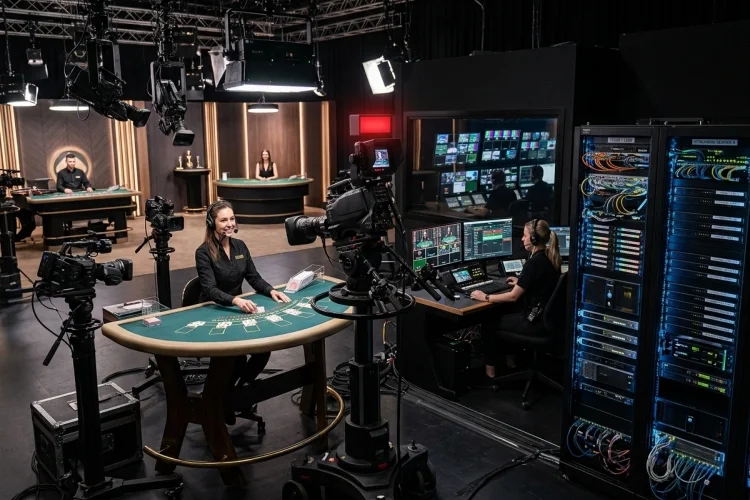
Live casino game shows can feel more like prime-time television than traditional casino tables. Bright studios, energetic hosts, giant wheels, bonus screens, sound effects, and animated multipliers make them visually very different from standard blackjack or baccarat.
This Live Casino Game Shows Explained guide is designed for beginners who want to understand what is actually happening behind all that entertainment.
We will look at how a typical round works, what players bet on, how live presenters interact with the game, and why bonus rounds and multipliers are such an important part of the format.
What Are Live Casino Game Shows?
Live casino game shows combine real-time casino streaming with entertainment inspired by television game shows.
Instead of sitting behind a blackjack or baccarat table, the presenter might stand beside a giant wheel, lottery machine, interactive board, or other physical gaming equipment.
Evolution describes the category as casino gameplay presented with television-style production, live hosts, multipliers, and bonus features.
Players normally watch the studio through a live video stream while using an on-screen betting interface.
The game may look complicated at first, but the basic idea is usually simple: select an outcome before the timer closes, watch the live result, and receive a payout if your prediction matches the winning result.
How a Typical Game Show Round Works
Most live game shows follow a clear sequence.
First comes the betting phase. Several betting positions appear on the screen, and a countdown tells players how long they have to make their selections.
When betting closes, the live host starts the main event. This could involve spinning a large physical wheel, revealing a number, activating a machine, or starting another randomised process.
The winning outcome is then displayed automatically, and valid bets are settled.
In Crazy Time, for example, players can choose number positions such as 1, 2, 5, and 10, or bet on one of four bonus rounds. The host then spins the main wheel while another system can apply multipliers to selected positions.
That structure is fairly easy to follow once you have watched a few rounds.
The Role of the Live Host
The presenter is one of the biggest differences between a game show and a conventional digital casino game.
The host explains what is happening, starts physical game elements, announces results, and keeps the broadcast moving. In many games, presenters also respond to chat or general activity from the audience.
However, the host does not decide who wins.
The result is determined by the game equipment and the rules behind the product. In a wheel-based title, for example, the host starts the wheel, but the segment where it eventually stops determines the outcome.
This is an important distiction for beginners because the energetic presentation can sometimes make the game feel more controllable than it really is.
Money Wheels Are a Common Starting Point
Large money wheels are among the most recognisable mechanics in live game shows.
A wheel is divided into sections representing numbers, payouts, or bonus features. Players choose one or more sections before the spin begins.
MONOPOLY Live provides a good example. Its main wheel contains 54 equal segments, including numbered positions, CHANCE sections, and bonus segments marked 2 ROLLS and 4 ROLLS. Landing on the latter options activates a virtual MONOPOLY bonus round.
Crazy Time uses a similiar concept but adds four different bonus games: Coin Flip, Cash Hunt, Pachinko, and Crazy Time.
The basic wheel is therefore only the starting point. Much of the variety comes from what happens when a special segment is selected.
Why Bonus Rounds Matter So Much
Bonus rounds are where modern game shows often become more interactive.
Instead of simply paying a fixed amount, a bonus may open a digital game where players choose an object, watch a virtual wheel, follow a puck through a peg board, or trigger another randomised event.
Crazy Time’s Cash Hunt, for example, presents a grid of hidden multipliers and allows participating players to select a target. Pachinko uses a puck that travels through a field of pegs toward multiplier positions.
Pragmatic Play’s Sweet Bonanza CandyLand takes a different approach. Its bonus options include Sweet Spins, Candy Drop, and Bubble Surprise, while Sugar Bomb features can introduce multipliers and respins.
These bonus stages create variety, but they do not guarantee larger wins simply because they look more dramatic.
How Multipliers Change the Payout
Multipliers are another major feature of the genre.
Instead of paying only the standard value for a winning position, selected outcomes may receive an additional multiplier. A 5x multiplier, for example, increases the relevant payout according to that particular game’s rules.
Crazy Time uses a Top Slot mechanism that can apply multipliers to number or bonus positions before the wheel result is known.
Other games integrate multipliers into the bonus round itself.
The exact calculation can become more complecated when multipliers stack, double, or apply only to certain bets. That is why checking the information panel before playing is far more useful than assuming every game uses the same system.
Live Game Shows Can Mix Physical and Digital Mechanics
Not everything you see in a live casino studio is purely physical.
Many modern titles combine real equipment with computer-generated features.
Lightning Roulette, for example, retains a live roulette wheel while adding randomly generated Lucky Numbers and multiplied payouts. Evolution states that between one and five Lucky Numbers can be selected in each round, with special payouts attached to them.
Sweet Bonanza CandyLand also blends a physical studio wheel with 3D effects and digital bonus features.
This hybrid design is one reason the category can feel so different from classic table games. You may be watching a physical wheel one moment and entering a virtual bonus environment the next.
Understanding RTP, Randomness, and Previous Results
A game may show recent results, statistics, or previous multipliers on screen.
Those displays can be useful for understanding what has happened, but they should not be treated as a prediction system. Evolution specifically notes that Crazy Time outcomes are random and that previous spins do not determine future ones.
The same principle is important when thinking about RTP.
Return to Player describes a theoretical long-term percentage rather than what one player should expect from a short session. The UK Gambling Commission explains that RTP becomes meaningful across a large volume of play, not individual rounds.
A high multiplier appearing recently does not make another one more or less “due.”
Live Casino Game Shows Explained becomes much easier once you separate the entertainment from the core mechanics.
Most games use a simple betting phase followed by a wheel, draw, or bonus outcome, while live hosts and visual effects make the experience more engaging.
Before participating, read the individual rules, payout table, and bonus conditions. Watching a few rounds first can also help you understand the flow without rushing into unfamiliar bet types.